Showing posts with label Young Adult. Show all posts

Thursday, July 22, 2010

Curious Incidents, Autism and Murder

The Curious Incident of the Dog in the Night-time The Curious Incident of the Dog in the Night-time by Mark Haddon

My rating: 4 of 5 stars


Many murder mysteries have narrators with interesting quirks (Columbo and Monk come to mind immediately). Perhaps one of the most original narrators is the star of Mark Haddon’s bestseller The Curious Incident of the Dog in the Nighttime, Christopher Boone. Christopher is a highly functioning autistic 15 year-old boy with a passion for animals and a desire to solve the mystery of the murder of his neighbor’s dog Wellington. Encouraged by his teacher, Shibboleth, Christopher decides to write a novel with a hat tip toward his favorite mystery hero, Sherlock Holmes. The book describes Christopher’s life in methodic detail as he tries to uncover the mystery of the murdered dog.
At first, the narration of the book is a bit jarring: non-sequential chapter numbers, run on sentences, absent punctuation and irrelevant tangential information. Once you realize that you are reading through the eyes of an autistic who prefers structure and logical methodology, the reading becomes easier. Later you discover that the chapter numbers are prime numbers, which, like all “maths”, Christopher has an affinity for. Though Christopher exhibits exceptional aptitudes in science and math, his development is hindered by a complete lack of emotion and social skills. Ironically, this is quite a touching book where the emotion comes through other characters, though Christopher seems oblivious to it.
Christopher shows many characteristics of Asperger’s, such as:
• Deficiencies in social skills. Christopher has tremendous difficulty showing emotion, accepting it in other people and even recognizing other people’s emotions, particularly when he is the cause. His relationships with other people are strained and people find him difficult. This is apparent when Mr. Shears decides to leave his mother after she decided to take Christopher in. Christopher doesn’t appear to have any friends or interpersonal relationships beyond the small circle of people in his life.
• Inflexible to a changing environment: Christopher has a defined schedule and gets overwhelmed when things change (ie, he has to “do moaning) or have too much new stimulation. When difficulties with his living situation arise, Christopher’s primary preoccupation is whether he will be able to do his “A level maths” in his new school.
• Preferences for certain foods, tastes, colours or sounds: Christopher has an aversion to the colors yellow and brown and only eats food of other colours. He gives a multitude of reasons for disliking yellow and brown foods, drawing on his photographic memory for random facts.
• High cognitive ability, interest and talent in a specific area: Christopher is exceptional at mathematics and science and aspires to be an astronaut. He has also an extraordinary photographic memory and often creates maps or symbolic representations.
• Behavioural problems: Christopher creates a lengthy list of all his behavioural problems he knows of in one scene (Often children with autism are not as self aware as Christopher, but likely this is a plot devise as much as brining the readers into Christopher’s mind.):

“A. Not talking to people for a long time.
B. Not eating or drinking anything for a long time.
C. Not liking being touched.
D. Screaming when I am angry or confused.
E. Not liking being in really small places with other people.
F. Smashing things when I am angry or confused.
G. Groaning.
H. Not liking yellow things or brown things and refusing to touch yellow things or brown things.” (Etc.)


Though I suspect most readers figured out who killed Wellington before Christopher, the story continued to entrance me and became yet another example of how Christopher’s lack of social skills hurt his ability to function in the world. The book is less of the mystery we were expecting and takes on more of a story of life about building trust, challenges in family life and growing up. That is a story theme we can all empathize with, regardless of our situations.

View all my reviews >>

Wednesday, July 21, 2010

Joey Pigza, Can I Get Back To You On That?

Joey Pigza Swallowed the Key (Joey Pigza Books)Joey Pigza Swallowed the Key by Jack Gantos

My rating: 3 of 5 stars


Joey Pigza tries to be a good kid and please the adults in his life but he can’t stop getting into trouble. Like his estranged father and the grandmother who took care of him when his parents left, Joey was born “wired”. He can’t get control of his behavior, which he blames on his “dud meds”. This book shows what life is like through the eyes of a 9 year old kid whose life is challenged not only by apparent attention deficit hyperactivity disorder (ADHD), but also from a tumultuous home life, and a host of teachers and administrators who don’t seem to know how to deal with him. Joey is an enduring yet flawed character and though he occasionally makes the wrong decisions, it’s easy to sympathize with a character capable of such heart-wrenching self-reflection. In the end, I cheered with Joey when he was able to successfully regulate his meds and return to his regular classroom after a particularly capable teacher “’Special’ Ed” at the Special Education school was able to get through to him about his personal ownership for his behavior challenges.
Although the book is intended for younger readers (grades 5-8), the book has universal appeal to anyone seeking to understand ADHD. As a parent or a teacher it’s easy to see how Joey’s destructive actions, though largely unintentional, could be misunderstood as hostile. Even Joey’s mother describes him as “hard to handle”. Children (and adults) who suffer from this disability may be thought lazy, careless and irresponsible, unable or unwilling to act with a conscience because of their behavior. Joey describes quite opposite motivations in one self-reflecting monologue how much he would like to be a normal kid:
I can have good days. Entire days when I wake up and I’m calm inside like water when it’s not boiling, and I just plant my feet on the floor like every kid in America and do a sleepy walk down to the bathroom and take a nice hot shower and wash my hair and dry off and get dressed and eat breakfast and all the while thinking about what I’d like to do with my day. And then the most amazing thing to me is after I think about what I want to do, like read, or see a friend, or say something nice to Mrs. Howard, or write a poem, I actually do all that stuff. That is *amazing* to me. I think it, then I do it. This may be how everyone else operates, but this is not how I usually operate. Usually I wake up with springs popping in my head, like I’m in the middle of a pinball game where I’m the ball, and I shoot out of bed and directly to the kitchen where I ricochet around after food until by chance I snatch some toast off the counter, then go slamming off the padded stool tops like they were lighted bumpers and zing up the hall into the bathroom where I try to brush my teeth, but I brush mostly my lips and chin and I explode back out the door and across the living room and carom off the furniture until Mom gets a grip on me a wipes the toothpaste off my face and works a pill down my throat. (pg. 51-52)
Although ADHD is the most often studied disability, in the current regulatory statutes of IDEA 04 it receives only cursory mention and is listed in the “other health impairments” special education category. Furthermore, children with ADHD are not explicitly covered by IDEA 04, even with medical diagnoses or prescriptions. The rationale behind this slight is that a large portion of ADHD suffers also have coexisting learning disabilities, emotional or behavioral disorders. IDEA will cover children with ADHD and provide special services to them only if the condition “adversely affects educational performance.” (Smith & Tyler, 2009) However, it can be challenging to define what an adverse impact to education actually means. We saw this in the story with Joey. Several incidents (sharpening his fingernails, swallowing a key, running away on a field trip and finally seriously injuring another student) occurred before Joey received help, even though administration and the school nurse was aware that he was receiving medication for his condition.
Though largely inaccurate, media often sensationalizes ADHD and further confuses public perception of the disorder. This negative portrayal can overshadow possible benefits of the disorder, including some famous people who attribute some of their success to positive traits of ADHD. For example, Olympic medalist Michael Phelps and CEO Navid Neeleman are both outspoken advocates for ADHD. Though teaching children with ADHD may be seen as a significant challenge, the truth is that many effective teaching techniques used for differentiating learning, particularly for learning disabilities, are also useful for students with ADHD. Providing interesting and appropriate instruction, peer coaches, immediate feedback and clear directions are benefits to all students and characteristics of good teaching. Additionally, classroom management and organizational strategies can have a positive effect on the entire classroom, not just the ADHD student. Intervening for problem behaviors can be as simple as providing a desk in proximity to the teacher and away from typical distractions like the pencil sharpener.
My biggest criticism of the book is that it strongly promotes drugs as the answer to ADHD. Joey claims – and the story even supports – that he has “dud meds” which wear off after lunch. Joey is successful and able to return to his regular school once he gets different medication. The book gives cursory mention to non-medical intervention and techniques for self regulation. This may be due in part to the narrator’s naivety to his own treatment (he is 9, after all), but I also feel it was a promotion of the author’s agenda of getting students to fit into society rather than adjusting to their needs. Though medical treatment has had some success, there is rising concern over the prevalence of prescribed medication and its side effects.
All criticism aside, I thoroughly enjoyed this book and would recommend it to teachers and parents who interact with students with ADHD. It would also be beneficial in a classroom setting as a book club or read along option to promote inclusion and acceptance, provided it doesn’t single out a child who has ADHD. As far as the medical treatment goes and what challenges Joey will face in upcoming books, can I get back to you on that?

View all my reviews >>

Thursday, September 24, 2009

A Great and Not Terrible Trilogy

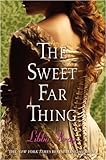
The Sweet Far Thing (Gemma Doyle, #3) The Sweet Far Thing by Libba Bray


My rating: 4 of 5 stars
This was by far my favorite of the 3 Gemma Doyle books, and an excellent audiobook.

I feel like Libba Bray's writing improved throughout the series, and the characters grew as time progressed. Gemma deals with more adult topics as she is nearing the end of her time in school, and the sub plots get darker and more complex as well.

Gone is the little girl who made butterflies out of leaves in the Realms, and in her place is a character who is nearly a grownup, very real and complex and at the same time - still her charming self.

If you've read ANY of the Gemma series, it's worth it to pick this one up and finish the story.

View all my reviews >>

Sunday, August 9, 2009

Dreamland

Dreamland Dreamland by Sarah Dessen


My rating: 3 of 5 stars
I enjoyed this, my very first Sarah Dessen book. Dessen's ability to create characters with complexity was refreshing, especially for this subject - an abusive, co-dependent relationship with a girl you really don't expect to be "that" girl.

The book made me look at teenage relationships in a different light. Should be required reading in health class, although I can't think that any teenage boy would use the book as anything other than a flyswatter.

View all my reviews >>

Sunday, June 14, 2009

A Certain Slant of Light

A Certain Slant of Light A Certain Slant of Light by Laura Whitcomb


My review


rating: 3 of 5 stars
The premise of the book intrigued me-could the undead really have soulmates? The story line from the book jacket:

Someone was looking at me, a disturing sensation if you're dead. I was with my teacher, Mr Brown. As usual, we were in our classroom, that safe and wooden-walled box - the windows opening onto the grassy field to the west, the fading flag standing in the chalk dusty corner, the television set mounted above the bulletin board like a sleeping eye, and Mr Brown's princely table keeping watch over a regimen of student desks.


That "someone" was Billy, a spirit inside a living person's body. This novel is an interesting and original ghost story that kept me rooting for the main character, Helen, who has haunted her live hosts without contact for over a hundred years. I literally could not put this book down last night until I finished it to find out what happened to Helen as Jenny and James as Billy.


Unfortunately, the end was rather anticlimactic. I ended up reading it twice to make sure I wasn't just tired, but alas... the end lacked the substance that kept the pages moving. The passion in the relationship when Helen was living her life in Jenny's body led to an end I felt somewhat cheated by. Helen and James got to live happily ever after in 400 words or less. There were far too little answers on what happened to the bodies they had been inhabiting while falling in love, their perfect spirit love was rather boring. I felt cheated as this had such wonderful possibilities. It got me wondering whether the editor got tired and let the last few pages go, as the producer did in nearly all of Steven King's movies.


A good, somewhat "light" YA novel with a lot of mature themes not suitable for your little sister.


View all my reviews.

Thursday, January 8, 2009

The Book Thief

The Book Thief The Book Thief by Markus Zusak

My review


rating: 5 of 5 stars

I am haunted by you humans.


So ends one of the most captivating books I’ve read in years, and I am similarly haunted by the trance of this book. In fact, I’ve been unable (or unwilling, perhaps) to pick up another book since.


Overview


The Book Thief is set in Nazi wartime Germany. In an interesting twist, Death (of Grim Reaper fame) is the narrator of the story. Captivated by a young girl, Death follows the events in her bittersweet life story, from the time she is given up from her birth until her death. It’s a story built of love and humanity in the most unlikely of places.


The Story Unfolds


Intertwined throughout the book is a passion for both books and human life. Liesel is an enduring, unlikely heroine - a school aged illiterate girl who loses her brother at the time of her separation from her mother and steals a book from his graveside. She quickly befriends a neighbor boy (Rudy) and together they commit small acts of defiance (from book and apple thievery to giving stale bread to starving Jews walking to Dafur) in an attempt to settle the score between the unfairness of the time.


As Liesel’s love grows for her foster father and her best friend, so does everyone around her fall in love with her. Her reading improves to the point where she reads books in the shelter to keep everyone calm during air raids. She sits in the enchanting library of the mayor’s home. She brings gifts to the ailing Jew hiding in their basement. She is a worth opponent in soccer tournaments in the streets with the boys.


Zusak touches on difficult times in history with a novel approach. From Death’s eyes, we see both virtue and malevolence in humanity. "So much good, so much evil. Just add water." Death occasionally interjects personal opinions into the book, which breaks the flow of the story. I found these anecdotal interruptions added to the depth of Death as a character, but some readers found this style distracting.


The end (spoilers)


After an air raid flattens the neighborhood unexpectedly at night, no one survives but Liesel. Death alludes to the possibility many times, which made me believe that when my favorite characters finally were ripped from the story, it wouldn’t be so painful. I was wrong. After you have fallen in love with Rudy, Hans and even warmed up to Rosa Hubermann, you miss them terribly. The tears on Liesel’s cheeks become your own.


Zusak literally put the mayor’s home on a hill – the rich were quite literally put on a pedestal. Liesel chastises the mayor’s wife for living in such affluence while others were living in poverty. One of her acts of defiance is to steal books from the mayor’s library. As the story evolves, it’s clear that the mayor’s wife has intentionally let Liesel steal the books, and shares her love of literature. In an interesting twist of fate after the air raid, the mayor’s wife comes to find Liesel and brings her to her home. While visiting Rudy’s father’s store, Max walks in and the two find a happy and tearful reunion.


There are happy and sad times in life, as there are opportunities for great heroism in times of tragic adversity. Zusak has captured them beautifully, and captured my heart as well.


View all my reviews.